
Monolito
La nueva generación de revestimientos de piedra de resina para exteriores
Monolith is a 100% water-permeable resin stone surfacing system engineered for both residential and commercial applications. Designed to be installed directly over stable existing bases such as concrete or asphalt, Monolith offers a seamless and sustainable solution for exterior environments.
Unlike traditional epoxy systems—which are prone to discoloration, brittleness, and cracking over time—Monolith is powered by UV-resistant polyurethane resin, making it significantly more flexible, durable, and long-lasting. Its advanced binder technology protects against fading, shifting, and sun damage, even in high-traffic or high-exposure areas.
Ideal for driveways, patios, walkways, pool decks, courtyards, and beyond, Monolith is low-maintenance and built to perform in all climates. With full permeability, it allows water to flow through the surface, reducing runoff and promoting sustainable drainage.
Monolith Features

Upgrade your exterior surfaces with Monolith
A future-proof solution designed to look beautiful and perform under pressure.
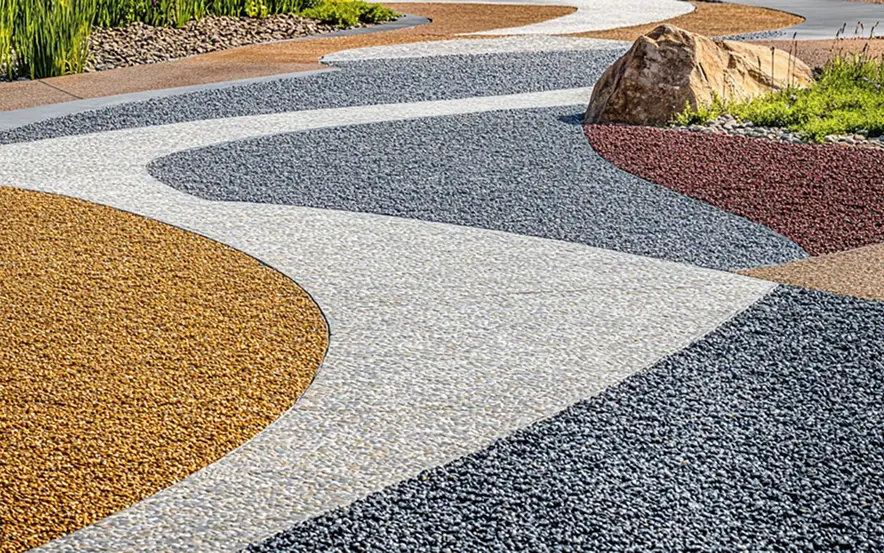
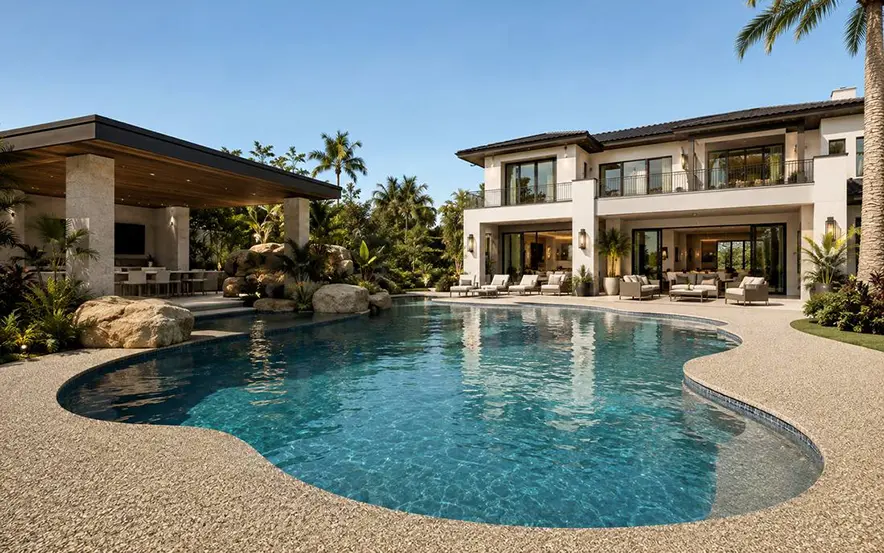
A new driveway, patio or pool deck
In two days, over the one you already have
Monolith is an overlay system: quartz aggregate locked in a single-component, UV-stable polyurethane binder and troweled directly onto your existing concrete or asphalt. It bonds monolithically to what’s beneath it — one continuous surface rather than a covering laid on top — and it drains completely. No demolition. No re-pour. No joints, no loose gravel, nowhere for water to sit. Get your complete material kit and price in under 60 seconds.
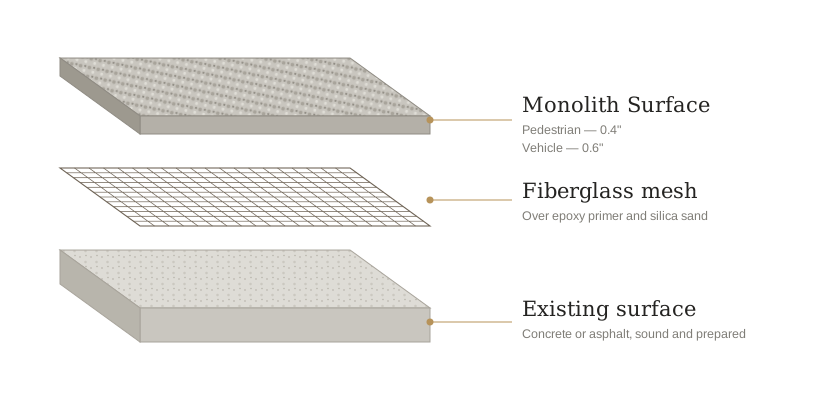
Three layers — One bonded surface
Monolith is specified as an assembly, not a product in a bucket. The resin stone layer is troweled over reinforcement, which is bedded onto your existing slab. Section thickness is set by traffic class — more stone carries more load.
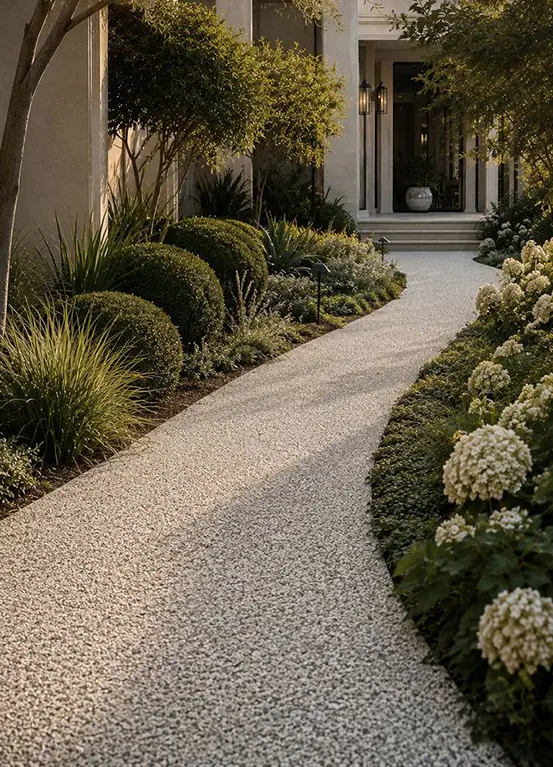
Water goes through it, not across it
Monolith is fully permeable. The open-graded matrix moves up to 24 gallons of water per square foot every minute — hundreds of times more than the heaviest downpour a US storm can deliver. Rain doesn’t sheet toward the low end of your driveway looking for somewhere to go. It disappears where it lands.
Independent testing shows zero surface runoff. That’s the practical difference you notice first: no standing water at the garage apron, no puddle at the bottom of the steps, no slick film around the pool coping ten minutes after a storm. The surface is walkable almost immediately.
Whether the full assembly drains to ground depends on what’s underneath. Over a permeable build-up, water passes through the surface and into the earth, recharging groundwater instead of loading the storm drain. Over an existing sealed slab, water passes through the Monolith layer and then follows the slab’s existing drainage — you still get the puddle-free surface, but the assembly isn’t infiltrating. If you’re chasing a stormwater credit or a permeable-paving allowance for a permit or an HOA, talk to our technical team about the base detail first.
Three components. One ratio.
No field chemistry.
Your kit ships as a complete system — primer through finish. Nothing to source locally, nothing to guess at. Epoxy pebble systems are two-component: get the ratio wrong or lose track of pot life and the surface cures soft, tacky, or not at all. Monolith is single-component and moisture-cured. Mix the resin into the quartz aggregate until fully homogeneous, add FLOWTECH, mix again, trowel.
Epoxy Primer
Bonds the system to your slab. Test the substrate for moisture first — a dry slab takes standard epoxy primer, a high reading takes a moisture vapor barrier instead.
Silica Sand
Broadcast into the wet primer to build mechanical key, so the layers above lock in rather than sit on a smooth film.
Fiberglass Mesh
Fine-weave reinforcement laid over the primed slab. Distributes movement across the field instead of letting it concentrate into a crack.
Monolith Stone
Kiln-dried quartz aggregate, graded so the matrix stays open and water drains through. Twenty blends, 50 lb per bag.
Monolith Resin
Single-component, moisture-cured, UV-stable polyurethane binder. Locks each stone in place while staying flexible enough to move with the substrate.
Flowtech
Transparent, low-odor anti-stick agent, dosed at 10% by weight of the resin. Keeps the mix releasing cleanly from the trowel. Added last, after the resin and aggregate are fully mixed.
Tile is where most people expect to hear “tear it out”
You don’t have to. Tile does need a prep step first: the grout joints are closed with thinset, or the field is skim-leveled, so the tile reads as one smooth, stable plane. Once that substrate exists, Monolith goes over the top the same way it goes over sound concrete or asphalt. That still takes the demolition, the disposal and the days of noise out of the job.
What disqualifies a substrate: active structural cracking, settlement or heaving, drummy or delaminating tile, standing moisture problems, or a base that was never stable to begin with. Those get fixed first. Your applicator assesses this before anything gets quoted — including a moisture test, which decides whether the slab takes a standard epoxy primer or a moisture vapor barrier.
Featured Projects
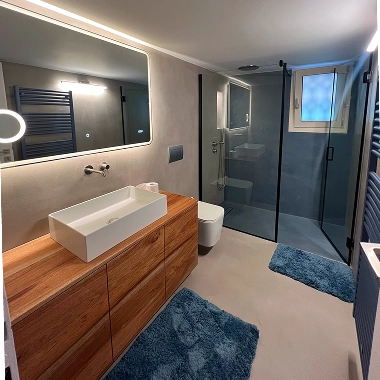
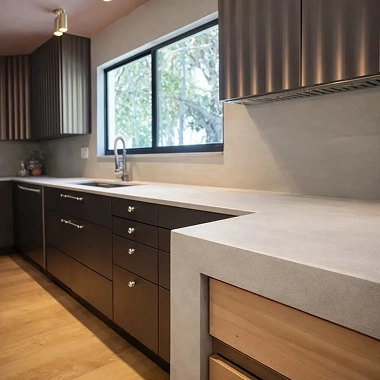


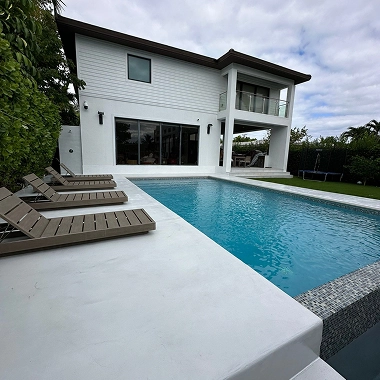
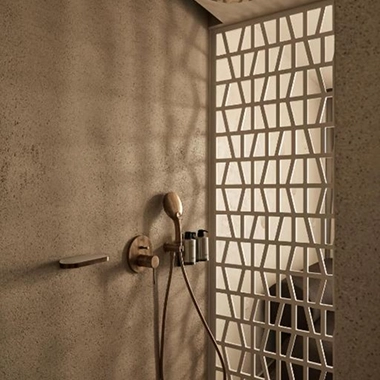
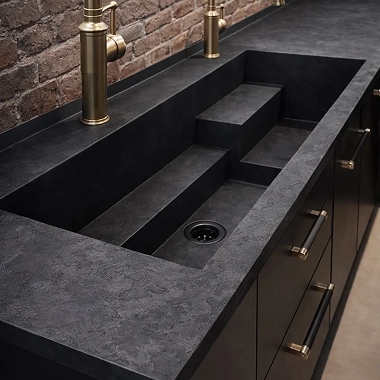
Crafted with Monolith
Reviews by Customers and Professionals




With you every step of the way
Dedicated professional support across the full project lifecycle

Frequently Asked Questions
How much does Monolith cost per square foot?
Monolith material runs $8–$10 per square foot for the complete system — epoxy primer, silica sand, fiberglass mesh, quartz aggregate, MONOLITH Resin and FLOWTECH. Nothing else to buy. Driveways land at the top of the range because they’re troweled at 0.6″ against 0.4″ for walkways and patios, which is more stone per square foot. Installation is quoted by your applicator and varies by region and substrate condition.
How long does a Monolith installation take?
Two days for a typical residential driveway or pool deck. Day one is prep and priming, day two is the resin stone layer. There’s no excavation and no re-pour, which is why it’s fast.
Can Monolith be installed over existing tile?
Yes — with a prep step. The grout joints have to be closed with thinset, or the field skim-leveled, so the tile becomes one smooth, stable plane. Once that substrate is created, Monolith goes over the top with no tear-out and no disposal. Drummy, delaminating or loose tile is removed and made good first. Your applicator tap-tests and assesses the whole field before quoting.
Can Monolith be installed over cracked concrete?
Over hairline and non-structural cracks, yes — with proper preparation and crack treatment. Over active structural cracking, settlement or heaving, no. The slab has to be stable first. Any applicator who tells you otherwise is setting you up for a callback.
Is Monolith the same as epoxy pebble or stone carpet?
Same visual family, different binder. Epoxy pebble and most stone carpet systems use a two-component epoxy, which is UV-unstable and rigid outdoors. Monolith uses a single-component, moisture-cured, UV-stable polyurethane that holds color and stays flexible in full sun.
Does resin bound stone get hot in the sun?
Less than solid concrete or dark pavers. The open-graded matrix doesn’t store heat the way a monolithic slab does, and lighter aggregate blends run cooler still. It’s the main reason it shows up around pools in hot climates.
Is Monolith really permeable?
Fully. The open-graded matrix moves up to 24 gallons of water per square foot per minute — hundreds of times more than the heaviest rainfall a US storm delivers — and independent testing shows zero surface runoff. Whether the full assembly drains to ground depends on the base underneath. Over a permeable build-up it infiltrates; over an existing sealed slab, water passes through the Monolith layer and then follows the slab’s existing drainage. Either way you get a puddle-free surface. If you’re chasing a stormwater credit for a permit or an HOA, talk to our technical team about the base detail first.
How much FLOWTECH do I need?
FLOWTECH is dosed at 10% by weight of the resin — one 2.2 lb (1 kg) container per 22 lb (10 kg) of MONOLITH Resin. The calculator works this out and adds it to your kit automatically. Sequence matters: add FLOWTECH only after the resin and quartz aggregate are fully mixed, then blend again before applying.
Can Monolith go on the vertical face of a step?
Monolith is a floor product — it’s formulated to be troweled flat, and on a vertical surface a standard mix will slump. Stair risers are the exception, and they’re handled with Aerosil: a thickening additive blended into the mix so it holds on the vertical face while it cures. That’s how you carry the surface continuously up and over a set of steps instead of stopping at the tread and cutting in a different material. Anything beyond risers — walls, planters, pool coping faces — is outside what Monolith is built for.
Which epoxy primer should I use?
Test the slab for moisture first — that decides it. On a dry, sound substrate a standard epoxy primer is all you need. If the moisture test comes back high, the slab takes a moisture vapor barrier primer instead. Skipping the test is how you get a bond failure six months later on a slab that looked perfectly fine on the day. Your applicator runs the test as part of the substrate assessment; our technical team will confirm the primer for your reading.
How long does Monolith last?
Professionally installed, a Monolith surface lasts 15–20+ years with minimal maintenance. Lifespan comes down to substrate preparation and traffic class more than anything else — which is why we certify applicators rather than selling to anyone with a trowel.
What are the cleaning requirements?
Minimal. Regular sweeping to clear debris, and a power wash once or twice a year keeps the surface looking new. There are no joints to re-sand and no sealer to re-coat on a maintenance cycle.
How does Monolith handle weather?
Monolith is UV-stable, frost-resistant and fully permeable, which is exactly the combination that survives an American climate range — Florida sun and afternoon storms, Northeast freeze-thaw, desert heat. Trapped water in a rigid system is what causes spalling; Monolith stays flexible and doesn’t trap water in the first place.
Do I need a permit?
Typically no, provided the surface is installed as a properly detailed permeable build-up. Because Monolith produces no surface runoff, it usually falls outside the impervious-surface rules that trigger review for a poured slab or a sealed driveway. Requirements vary by municipality and HOA, so confirm locally before you start — and if you’re claiming a permeable-paving or stormwater allowance, get the base detail specified with our technical team.
Does the calculator include installation?
No — the calculator prices the complete material system only. Shipping and tax are calculated at checkout, and we can match you with a certified applicator through the Pro Connect network.

 Spanish
  English
  German