

Why homeowners weigh alternatives to concrete patio when building a new patio
The decision to build or replace a patio affects outdoor space usage, curb appeal, and maintenance expenses, so weigh all of the options before committing. While poured concrete offers simplicity and durability, several factors push homeowner priorities toward other patio material choices.
Environmental concerns drive property owners beyond traditional concrete because Portland cement production consumes massive energy and creates major CO2 emissions. Alternatives like ferrock, hempcrete, and compressed earth blocks substantially reduce carbon footprints while delivering comparable performance.
Durability concerns and inevitable concrete cracking motivate homeowners to consider materials that handle stress differently. Although concrete offers excellent compressive strength, it performs poorly under tension and cracks when soil shifts or freeze-thaw cycles occur. Some alternatives including certain paver patio systems and natural stone provide better tensile strength or simpler repairs.
Cost remains decisive for most homeowners, as budget is obviously a major constraint in any backyard renovation project. Comparing options from gravel through concrete pavers to natural stone patio surfaces identifies the best balance between affordability and aesthetics. Concrete wins initial cost comparison, but higher-end pavers or natural stone deliver significant value of your home increases that offset steeper upfront prices.
Climate requirements influence selection because freeze-thaw cycles, drainage, and heat absorption affect longevity. Gravel and decomposed granite excel in drainage, while pavers and natural stone withstand freeze-thaw when properly installed.
Natural stone patio: look, lifespan, and cost comparison
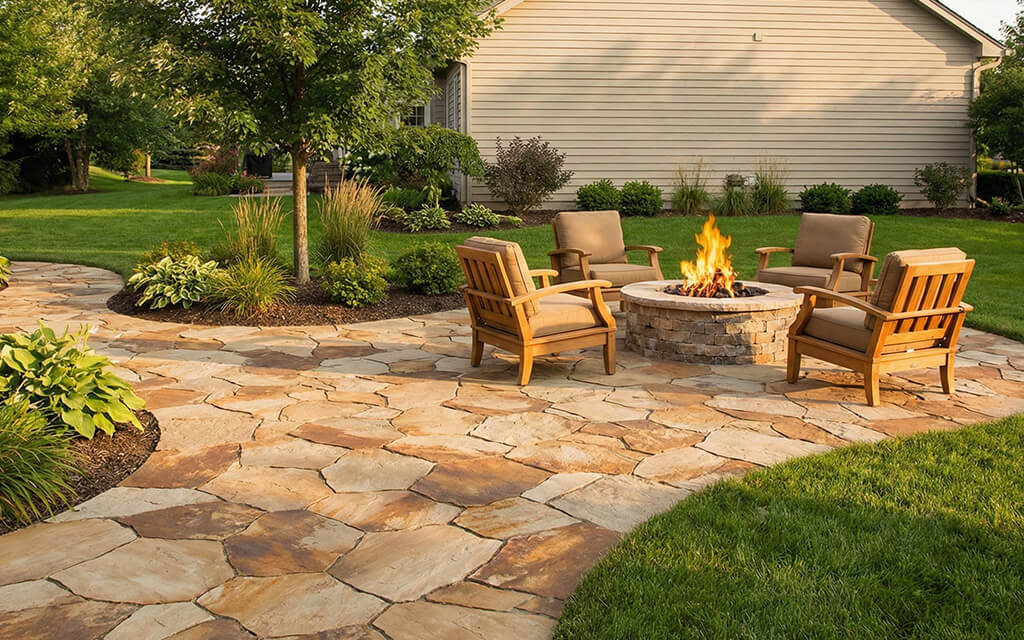
Choosing a natural stone patio depends on aesthetics, durability, and budget because these surfaces deliver refined organic beauty that artificial materials can’t replicate. Natural stone brings higher costs and complex installation but often justifies the investment when resale value matters.
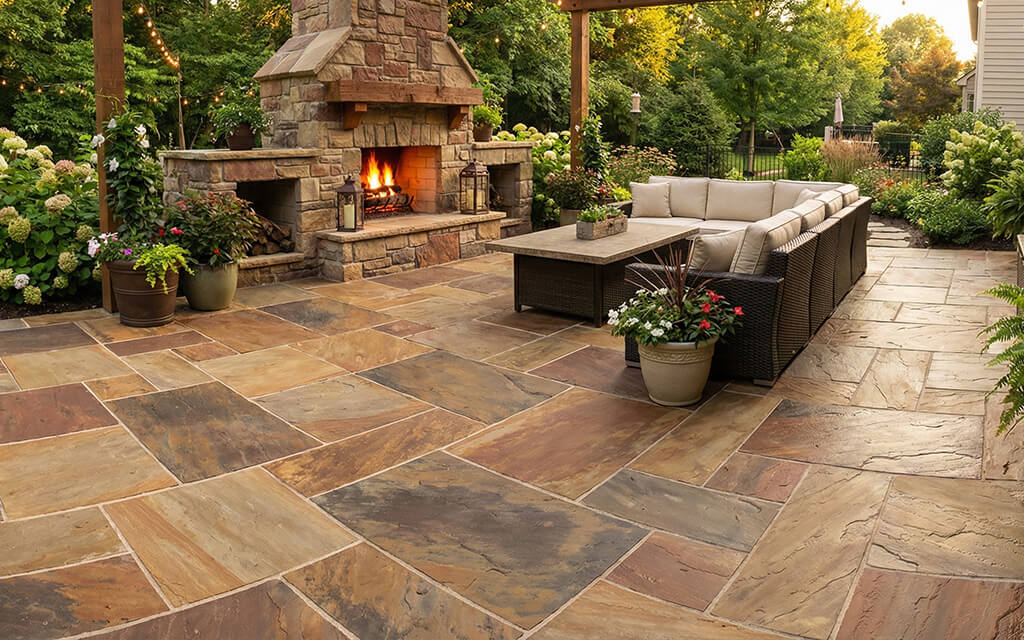
Material options vary widely. Flagstone creates rustic patterns perfect for cottage gardens, bluestone offers dense flat surfaces for formal designs, and slate provides modern layered textures. Each stone type brings unique color variations making every installation one-of-a-kind.
Cost differences between natural stone is the cost factor that most often eliminates this choice. Natural stone typically runs $15 to $50+ per square foot installed compared to $6 to $20 for concrete pavers or $4 to $15 for basic poured concrete. Labor costs run higher because stone requires skilled installation, and heavy weight increases transportation expenses.
Surface Type | Cost (USD/sq ft) | Key Attributes | Lo mejor para |
Basic poured concrete | $4–$15 | Low cost, quick install | Budget projects, modern look |
Concrete pavers | $6–$20 | Modular, easier repairs | Mid-range budgets, DIY-friendly |
Natural stone (flagstone, bluestone, slate) | $15–$50+ | Premium look, long lifespan | High-end properties, maximum resale |
Natural stone is also more durable than concrete and lasts 50+ years when maintained. Stone resists weathering better and requires less frequent refinishing. Premium investment usually translates to increased home value appealing to buyers seeking quality outdoor spaces.
But natural stone is going to create challenges. Stone’s weight requires extra excavation and skilled labor to prevent settling, driving up costs compared to lighter paver patio alternatives. Maintenance includes periodic sealing and occasional releveling, though these tasks remain simpler than repairing cracked concrete.
Paver patio options: concrete pavers, brick, and interlocking systems
A paver patio delivers durability through modular surfaces combining structural advantages with flexibility to replace damaged units. Choosing a paver patio gives options from uniform concrete pavers through traditional brick to modern interlocking systems.
Concrete pavers come in consistent sizes and extensive colors appealing to those wanting predictable results and straightforward repairs. Clay brick brings classic character improving with age. Interlocking systems speed installation and handle uneven ground better.
The cost of a paver patio varies from DIY-friendly to professional ranges depending on materials and site prep. Many find mid-pricing attractive balancing affordability with quality. Understanding that pavers are easy to repair gives confidence that initial investment won’t become obsolete when units crack, since you can lift damaged pavers can simply be replaced without affecting surrounding sections.
One advantage of using concrete for a patio as opposed to pavers is the lower initial cost, but pavers are easy to fix making them cost-effective over decades despite higher installation costs. This modular characteristic means repairs don’t require patching and color-matching like concrete.
Paver patio surfaces offer design flexibility impossible with solid slabs. You can arrange pavers in herringbone, basketweave, or circular patterns adding character, and options mimicking natural stone appearance deliver high-end aesthetics without premium prices. Adding borders and mixing sizes creates custom looks making your patio feel intentionally designed.
When evaluating options, consider drainage needs, budget, and style. Budget projects benefit from interlocking concrete systems, while classic looks suit clay brick or stone-textured pavers. Heavy-use areas require thicker pavers and well-compacted bases.
Paver Type | Cost per sq. ft. | Principales ventajas | Mejor uso |
Concrete pavers | $6–$20 | Wide colors, uniform size, easy repairs | Patios, walkways, light driveways |
Clay brick pavers | $8–$25 | Classic look, lasting color, ages well | Historic homes, formal patios |
Interlocking systems | $6–$22 | Fast install, handles slopes | Large patios, DIY projects |
Permeable pavers | $10–$36+ | Stormwater control, reduces runoff | Drainage concerns, green goals |
Permeable pavers deserve consideration when sites require stormwater management because these systems allow water through joints rather than into sewers. This prevents flooding, recharges groundwater, and may satisfy municipal requirements where permeable driveway surfaces are mandated. Sustainability benefits make them worth premium cost when drainage matters.
Gravel and decomposed granite as low-cost patio surfaces
Gravel and decomposed granite rank among the most budget-friendly alternatives to a concrete patio because they require minimal prep, drain exceptionally well, and create natural-looking surfaces blending with gardens. These suit homeowners seeking quick, inexpensive solutions who don’t mind informal appearance.
Loose gravel provides excellent drainage but shifts under foot traffic. Decomposed granite (DG) packs down forming firmer walking surfaces while allowing water percolation. Gravel excels in drainage, while DG delivers better furniture stability.
Cost makes these particularly attractive, with gravel running $1 to $5 per square foot and DG costing $2 to $7 including installation. Both work for DIY since they need only basic tools. Using a gravel binder stabilizes loose gravel creating more permanent surface maintaining drainage.
Furniture stability challenges affect loose gravel more severely. Thin-legged chairs sink into loose surfaces creating uneven seating. DG provides firmer footing when compacted but needs proper edge restraints preventing material loss.
Drainage performance ranks as the primary advantage because water flows through without ponding. Maintenance includes raking, topping thin areas, and controlling weeds. Gravel tracks indoors but proper edging and doormats minimize this.
Resurfacing and decorative concrete approaches
Resurfacing breathes life into existing slabs without demolition mess, disposal costs, and extended timelines full replacement requires. This approach saves money and reduces waste when underlying slabs remain sound.
Concrete resurfacing and overlays
Overlays and specialized compounds bond directly to existing concrete covering stains and minor cracks with thin layers restoring appearance. Products typically apply at ⅛ to ½ inch thickness avoiding excavation costs. Properly resurfaced concrete patio surfaces can look new while costing 50 to 70 percent less than replacement.
Stamped concrete, exposed aggregate, and integral color
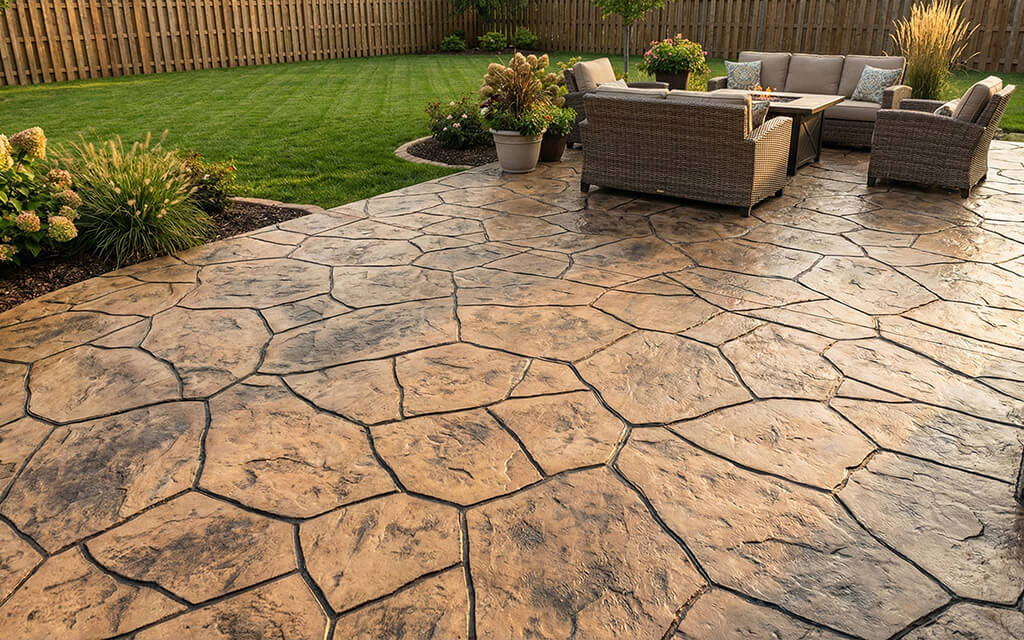
Stamped concrete replicates natural stone, brick, or tile through textured patterns pressed before curing. This costs more than plain finishes but substantially less expensive than natural stone while delivering visual interest standard gray concrete lacks. Look of a stamped concrete patio resembles high-end materials closely.
Exposed aggregate reveals decorative stones creating textured surfaces with natural look appeal. This sits in middle cost range providing aesthetic value and improved traction. Integral color mixes pigment throughout ensuring wear won’t reveal gray concrete underneath. This costs more initially but eliminates painting expenses maintaining consistent appearance.
When resurfacing beats replacement
Resurfacing makes sense when slabs show only surface damage without structural issues like heaving or wide cracks. The process avoids excavation, removal, and disposal, potentially saving 50 to 70 percent while dramatically improving curb appeal.
For stable slabs needing cosmetic upgrades, resurfacing delivers excellent return on investment by transforming eyesores into attractive spaces enhancing property appeal. But severe structural damage requires replacement, so attempting to cover serious problems wastes money on temporary fixes.
Earth-based and emerging eco-friendly materials
Innovative options reshape thinking about outdoor surfaces by dramatically reducing carbon footprints while offering unique performance. These range from recycled industrial waste materials to biologically grown products.
Hempcrete combines hemp fiber with lime creating lightweight breathable material with good insulation. Hemp absorbs CO2 during growth making construction carbon-negative. Compressed earth blocks utilize local soil compacted under pressure costing less than concrete where suitable soil exists.
Ferrock incorporates recycled steel dust and glass with minimal cement creating material absorbing CO2 during curing, making it carbon-negative. It achieves strength comparable to concrete, particularly suitable for patios requiring structural performance and reduced environmental impact. Ashcrete formulations replace significant Portland cement portions with fly ash or slag reducing emissions while often improving durability.
These emerging materials work best for specific applications where unique properties deliver advantages conventional options can’t provide. Some formulations now match concrete’s strength while substantially reducing carbon footprints when availability and contractor expertise align.
Resin stone surfacing: UV-stable alternative to epoxy and concrete
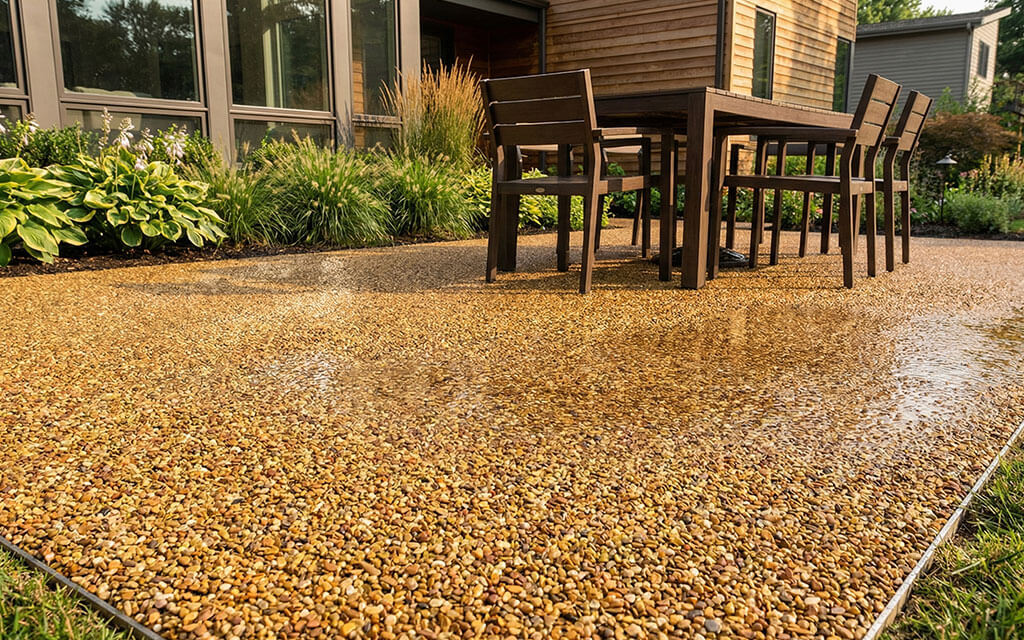
Modern resin stone systems offer compelling alternatives to concrete patio surfaces by combining natural stone aggregates with advanced polymer binders creating seamless, permeable surfaces with superior durability. Unlike traditional epoxy products suffering UV degradation and brittleness, polyurethane resin systems maintain appearance through years of sun exposure.
Comprender what is resin stone clarifies why these systems outperform both concrete and epoxy alternatives outdoors. The technology bonds natural stone aggregates with clear polyurethane resin creating continuous surfaces remaining fully permeable while resisting cracking, fading, and maintenance issues plaguing traditional options.
Resin bound gravel systems install over existing concrete or aggregate bases creating attractive, durable surfaces allowing water flow-through rather than runoff. This permeability addresses stormwater requirements while preventing puddles making conventional patios uncomfortable after rain.
A resin driveway uses the same technology scaled for vehicular loads, demonstrating versatility across applications. Systems handle foot traffic, furniture, and vehicle weight without deteriorating or requiring frequent resealing concrete needs. Installation over existing surfaces eliminates demolition costs while creating finished patios in days.
Comprender epoxy resin problems that affected earlier systems explains why modern polyurethane formulations represent genuine improvements. UV exposure causes epoxy to yellow, crack, and fail prematurely despite high costs. Polyurethane resins resist UV damage maintaining color stability and flexibility preventing brittleness.
Comparing to pervious concrete disadvantages reveals benefits including lower maintenance and superior appearance. Pervious concrete clogs as sediment fills voids requiring expensive maintenance restoring drainage. Resin-bound surfaces maintain permeability without specialized maintenance equipment.
Why Terrazzo Granitech Monolith is the best resin stone solution
Terrazzo Granitech’s Monolith represents the next generation of outdoor resin stone surfacing by combining 100% water permeability with UV-resistant polyurethane resin technology outperforming both concrete and epoxy systems. The product installs directly over existing concrete or asphalt, eliminating demolition costs while creating seamless surfaces ideal for driveways, patios, walkways, pool decks, and courtyards.
Unlike epoxy systems that yellow, crack, and fail under sun exposure, Monolith’s advanced polyurethane binder resists fading and maintains flexibility through years of weather exposure and temperature extremes. This crack-resistant, fade-resistant technology handles high-traffic areas and harsh climates without maintenance headaches plaguing conventional options.
The system’s full permeability addresses environmental concerns and drainage needs by allowing water flow-through rather than creating runoff. This sustainable approach reduces environmental impact while improving usability, and natural stone appearance delivers premium aesthetics without installation complexity or costs making flagstone or pavers impractical.
Monolith offers extensive color options from obsidian black Santorini through warm ivory Casablanca to sophisticated grey Manhattan, each incorporating carefully sized aggregates creating distinctive textures unique to resin stone. The combination of superior performance, attractive appearance, environmental responsibility, and cost-effectiveness positions Monolith as an ideal solution when you want a patio that looks exceptional, performs reliably, and treats the planet responsibly.
How to choose the right patio material
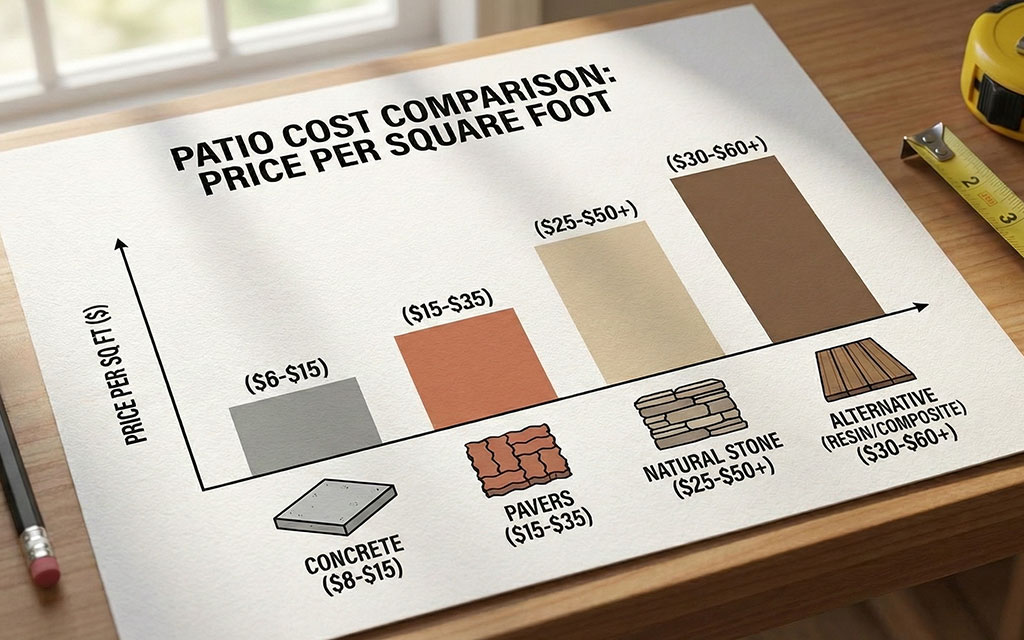
Start by defining your budget and visualizing how you’ll use the space because finding balance between cost and value determines satisfaction years after installation. Gravel or decomposed granite at $1 to $7 per square foot delivers lowest investment, while basic poured concrete or budget concrete pavers in $4 to $20 range provide more polished appearance.
Climate and property characteristics should guide selection because different regions present unique drainage requirements, freeze-thaw cycles, and sun exposure affecting longevity and comfort. Pavers or natural stone excel in severe freeze-thaw areas because modular construction accommodates ground movement. Concrete works well in milder climates where cracking risks remain lower.
Evaluate maintenance and repair logistics carefully because these factors dramatically affect long-term costs even when initial prices seem attractive. Pavers are easy to repair by lifting damaged units, while natural stone allows similar modular repairs. Concrete patio can add functionality at low initial cost, but repairs require patching that’s nearly impossible to disguise, and patio will still be functional after cracking even though appearance suffers.
Consider eco-friendly alternatives including ferrock, hempcrete, and modern resin stone systems like Monolith when environmental impact matters. These deliver genuine sustainability benefits including reduced carbon footprints and improved stormwater management without sacrificing performance in properly selected applications.
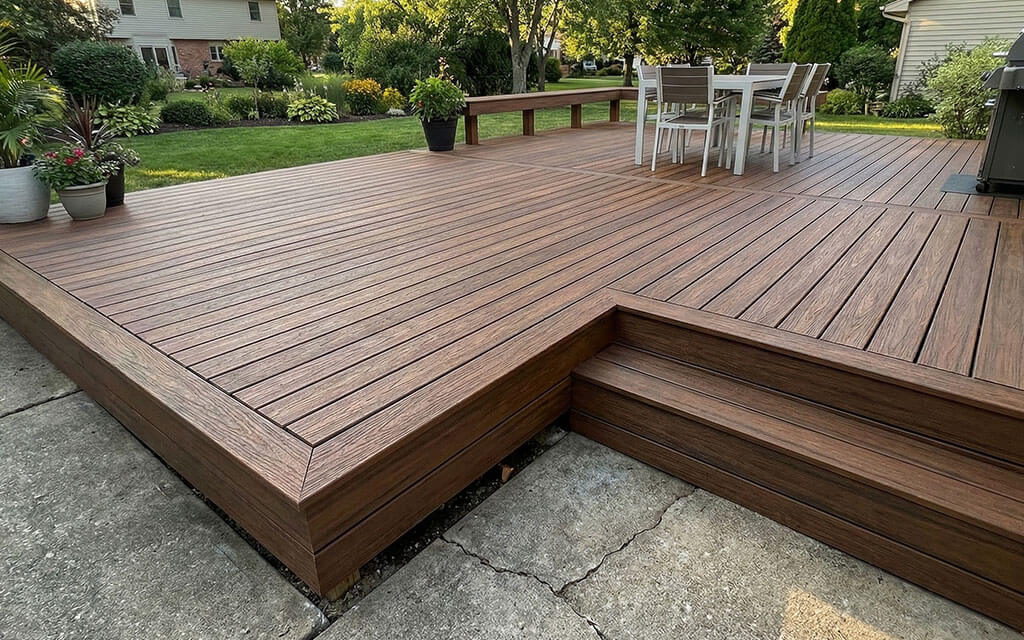
To make informed decisions, obtain detailed quotes from multiple contractors, compare finish options and warranties, and ensure your patio size suits actual needs. A floating deck or resurfacing may save substantial money compared to new construction. Comparing return on investment of concrete versus premium materials helps understand whether higher-end surfaces make financial sense given property value and plans.
In the end, choose what’s best for your specific situation by balancing all factors including budget, climate, maintenance willingness, aesthetic preferences, and ownership timeline. Concrete offers affordability satisfying many homeowners seeking functional space, while pavers and natural stone deliver superior appearance and resale value justifying higher costs. Best for your property means different things to different people, so thoughtfully evaluating priorities produces better results than following general recommendations.




 Spanish
  English
  German